

The Fallas of Gandía
What are the Fallas de Gandía?
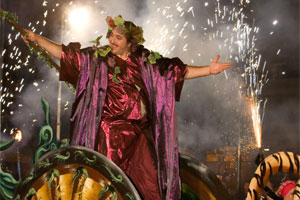
The celebration of Fallas in Gandía dates back to the 18th century and has evolved over the years, becoming one of the most important festivals in the city. The celebration begins on the last Sunday of February with the "Crida," an event that announces the start of the festivities and invites the population to participate in them.
During the following days, different activities such as parades of floats, paella contests, concerts, and pyrotechnic shows are carried out. March 17th is the day when the "Nit del Foc" (Night of Fire) is celebrated, in which the falleros monuments are burned, an act that symbolizes purification and rebirth.
One of the most prominent aspects of Fallas de Gandía is the elaboration of falleros monuments. Each fallera commission (a group of people responsible for organizing the falla) builds its own monument, which represents a satirical or comical scene. These scenes are usually starring popular characters or current situations.
The tradition of Fallas in Gandía is deeply rooted in local culture and has been declared a National Tourist Interest Festival. In addition to being a fun and colorful festival, it is an occasion for the inhabitants of the city to come together and celebrate their identity and traditions.
What to see in Gandía
Gandía is a city with a great historical and cultural richness and has numerous places of interest that are worth visiting. Some of the main tourist attractions that you can find in Gandía are:
- The Ducal Palace of the Borja family: It is an impressive building that was built in the 15th century by the Borja family, one of the most important families of the time. Currently, the palace is the headquarters of the University of Valencia and some of its rooms can be visited.
- The Collegiate Church of Santa Maria: It is a church dating back to the 13th century and located in the historic center of Gandía. It is one of the main architectural gems of the city and has an impressive Baroque altarpiece.
- The Archaeological Museum: It is located in the old San Marcos hospital and houses an important collection of archaeological remains from different periods, from prehistory to the Roman era.
- The Gandía Beach: It is one of the most famous and crowded beaches in the Valencian Community, with more than three kilometers of fine sand and crystal-clear waters. It is an ideal place for water sports or just to enjoy the sun and the sea.
- The Natural Park of Marjal de Gandía: It is a protected natural space of great ecological importance, located south of the city. It is an ideal place for hiking or cycling, and has a great variety of native flora and fauna.
In addition, in Gandía, you will also find numerous restaurants where you can taste the local cuisine, which stands out for dishes such as fideuà, arròs al forn (oven-baked rice), or all i pebre (eel stew).