


Nabata descent on the Cinca River
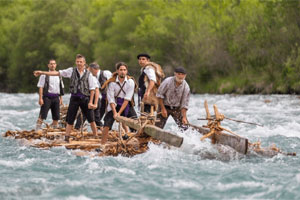
This festival brings back the tradition of a lost trade, which was the transportation of wood by taking advantage of the downstream flow of the Cinca River. It pays homage to a common trade in the Sobrarbe region, which has now been revived as a tourist attraction for visitors to enjoy.
The descent begins in the town of Laspuña, where onlookers gather at strategic points along the route to watch the old-fashioned boats navigate the river's rapids. The public gathers mainly at the finish line, the bridge over the Cinca River in the town of Aínsa, which marks the end of the descent.
It takes place on the second-to-last Sunday in May to take advantage of the increased water flow caused by the thaw. This festivity thus marks the beginning of spring in this mountainous area.
Throughout the region, during rainy or thaw periods, you could see these boats on the Pyrenean rivers, but the nabatas of the Cinca River were famous in the recent past for the especially difficult conditions of this river, with rapids in its course. Today, the nabatas are prepared in the old-fashioned way, and the riders dress in period clothing. The descent ends in the town of Aínsa, the capital of the Sobrarbe region.
Traditionally, a series of logs were joined together to form the entire structure of the nabata, which was steered by two men who used a type of oar or pole to guide and support it. The nabatas could be joined together in groups to improve the conditions of the river descent.
These boats could reach as far as the Ebro, or even towns on the Mediterranean coast where wood was needed for various types of industry. But the improvement of transportation and communication networks ended this deeply rooted trade.
There is a popular saying that passes down from generation to generation, which speaks to the harshness of the river: "Zinca traidora, que as piedras amuestras y a os ombres afogas." (Cinca traitor, that shows the stones and drowns the men.)