

The Piedaescrita Pilgrimage
What is the Romería de Piedraescrita?
The Romería de Piedraescrita is one of the most important festivities in the region of La Serena, celebrated in the town of Campanario in Badajoz on Easter Monday in honor of its patron saint, the Virgin of Piedraescrita. The festival dates back to the 13th century when the image of the Virgin was found at the location where a hermitage was built in the 15th century.
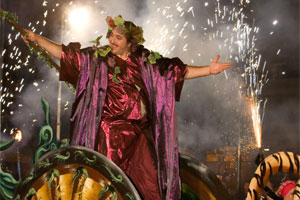
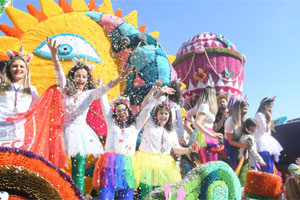
In the months leading up to the celebration, the residents of Campanario dedicate themselves to making floats, wagons, and horses that are part of the impressive parade of floats that takes place on the day of the festival. The parade is a true spectacle of light and color that travels through the streets of the town and has become so impressive that a competition is held to choose the best float.
After the parade, the pilgrims head to the hermitage of the Virgin of Piedraescrita, where a religious ceremony is held, and a day of fellowship in the countryside is enjoyed, tasting the typical Easter delicacies and sweets as well as the rich Extremaduran and local cuisine, such as cheese from La Serena.
Origins and Evolution
Legend has it that the origin of the Virgin of Piedraescrita dates back to the 13th century when a Roman funerary relic with an inscription that read, "To Lucio Valerio Lucio Fabio Calixto, Silvano Victello Valeriano: Victors," was found alongside the image of the Virgin. Since then, the festival has evolved into a massive event that attracts visitors from all over.
The preparation of the floats is a laborious task that takes over two months of work, using a large amount of tissue paper, glue, and structures to hold the figures. The result is exceptional, and each year, a competition is held to choose the best float.
Once the pilgrimage is over and back in Campanario, several stops are made to sing and dance, with the stop at the Cruz de Piedraescrita being a mandatory moment. Finally, the celebration continues with a party in the city center that lasts until the early hours of the morning.
The Romería de Piedraescrita is a festival that stands out for the involvement of its residents in its organization, its color, and joy, and has become one of the most popular and anticipated Tourist Festivals of Extremadura.
What to See in Campanario
Campanario is a town in Extremadura with a rich cultural and natural heritage. Among its main attractions are the Parish Church of Our Lady of the Assumption, the Plaza de España, the Ethnographic Museum, the Tower of Homage, and the House-Museum of the Poet José Mª Gabriel y Galán.
In addition, it is possible to enjoy nature in the Natural Reserve of the Sierra de la Culebra and the Special Bird Protection Zone of La Serena.
Recommended Crafts and Shopping
In Campanario and its surroundings, the most outstanding craftsmanship is ceramics, with unique handmade pieces that can be a beautiful souvenir of the visit. Local gastronomic products, such as La Serena cheese, cured meats, and wines from the Ribera del Guadiana Designation of Origin can also be found. Additionally, it is possible to purchase leather items such as shoes and belts, and wrought iron decorative objects.
It is advisable to visit craft shops and local markets to find authentic and quality products.
What to eat in Campanario
In Campanario and its surroundings, you can taste various typical dishes of Extremaduran cuisine. Among them stand out tomato soup, asparagus soup, migas extremeñas (a dish made with breadcrumbs and garlic), calderillo (a stew made with pork and potatoes), guiso de patatas con carne (a meat and potato stew), hornazo (a type of savory pastry), empanadas de cecina y yerbabuena (a type of meat pie with cured beef and mint), and sweets such as "jornazo" and queso de la Serena (a type of cheese).
Additionally, it is recommended to try the wines from the Denomination of Origin Ribera del Guadiana.