

The Paloteo Dance of Longares
What does the Longares Paloteo Dance consist of?
The Dance of the Paloteo de Longares is one of the most important festivities of the municipality of Longares, located in the province of Zaragoza. Outstanding for its antiquity and tradition, this celebration is classified as a Festival of Tourist Interest of Aragon since 2005, considered as an attractive tourist phenomenon of the town to celebrate the festivities of Longares and the day of the Virgen de la Puerta. We invite you to know it and enjoy it!
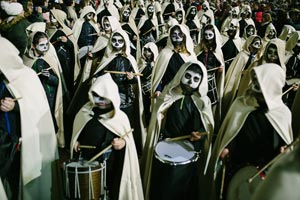
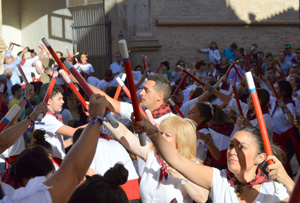
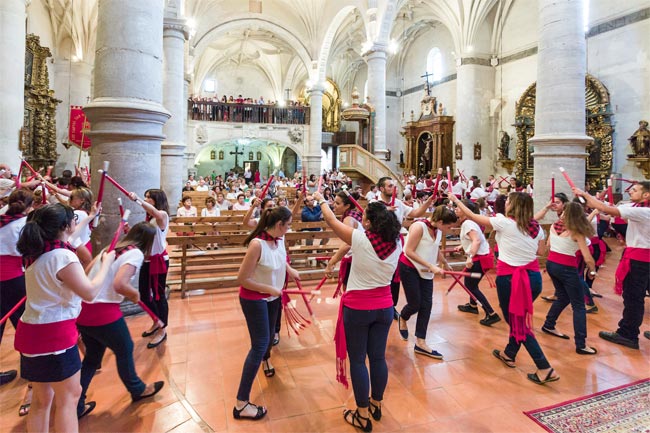
The paloteo is accompanied by the music of the Band of Almonacid de la Sierra, with an estimated participation of 200 dancers, forming groups of four people who perform a series of repetitive movements with their sticks painted red and white, in the traditional procession through the streets of the town to the Parish Church of Nuestra Señora de La Asunción.
The procession begins and ends with the Spanish National Anthem and the cheers of those present: Long live San Vicente and San Gonzalo! Long live the Virgen de la Puerta!
Origin of the festivity of the Paloteo
In 1668 the archbishop of Granada brought the relics of the holy martyrs Vicente and Gonzalo from Rome to Longares. The locals received this event with great emotion, dancing spontaneously on the way to the church. This simple fact marked the beginning of this popular festivity.
Subsequently, other elements have been incorporated to this traditional dance, such as sticks, music and uniforms, celebrating today its 352nd anniversary.
Curiosities of the festival
- This singular festivity is celebrated twice a year: during the patron saint festivities of Longares (on 2 September, the day of San Vicente and San Gonzalo) and on the day of the Virgen de la Puerta (8 September).
- Previously, only men doing their military service could take part in the dance. From 1970 onwards, men, women and adolescents from 12 years of age joined in.
- This dance does not perform outside the municipality of Longares, nor does it take part in exhibitions or dance rallies, preserving and reaffirming its cultural identity.
What else can you see or do if you go to the festival?
The main economic activity in Longares is the growing of grapes. So you can enjoy some magnificent local grape wines and visit some of its wineries and vineyards: Bodega Covinca, Bodega Gabarda, Solar de Uberzo, among others.
You can also visit the parish church of La Asunción, declared a Historic-Artistic Monument. It was built at the end of the 14th century and has an imposing six-storey tower, as well as a collection of liturgical objects from long ago that you can find in the Parish Museum.
Gastronomy
You will be able to taste the quality of the wines produced in this town, which have been awarded Designation of Origin status. We also invite you to try some of the typical dishes of Zaragoza:
- Ternasco de Aragón (young lamb roasted in the oven with potatoes).
- Borraja with potatoes (typical vegetable of Aragon).
- Huevos al Salmorrejo (accompanied with pieces of pork loin, sausage, asparagus and garlic).